How can we have a more sustainable future for absorbent hygiene products?
31 July 2026
Absorbent hygiene products (AHPs) such as nappies, incontinence products and menstrual products are essential to health, dignity and everyday life. Yet they also represent one of the world's largest and most overlooked waste streams, generating an estimated 160-200 million tonnes of waste every year. Most of this waste is currently sent to landfill or incineration. In regions without adequate waste collection, used products are often dumped or burned, contributing to plastic pollution, contaminated water and the spread of disease.
In a new article published in Nature Sustainability, researchers from our Big Toilet Project team at UCL explore how we can transform the way absorbent hygiene products are designed, used and managed at end of life. The paper identifies key research priorities and outlines a pathway towards a more sustainable and circular system for these essential products.
“These products are essential for health, dignity and caregiving, but their environmental impact has largely gone under the radar. What our research shows is that this is not a problem with a single solution. It requires coordinated changes across behaviour, technology, materials and policy.” Dr. Elze Porte, UCL
The research highlights three major opportunities for change. First, reducing product use where appropriate through earlier toilet training and greater uptake of reusable alternatives can help lower overall demand for disposable products. The study notes that changing social norms, a lack of support and guidance for caregivers, and practical barriers in childcare and workplaces have contributed to growing reliance on disposable nappies in many countries. Better support for families and caregivers could therefore play an important role in reducing waste.
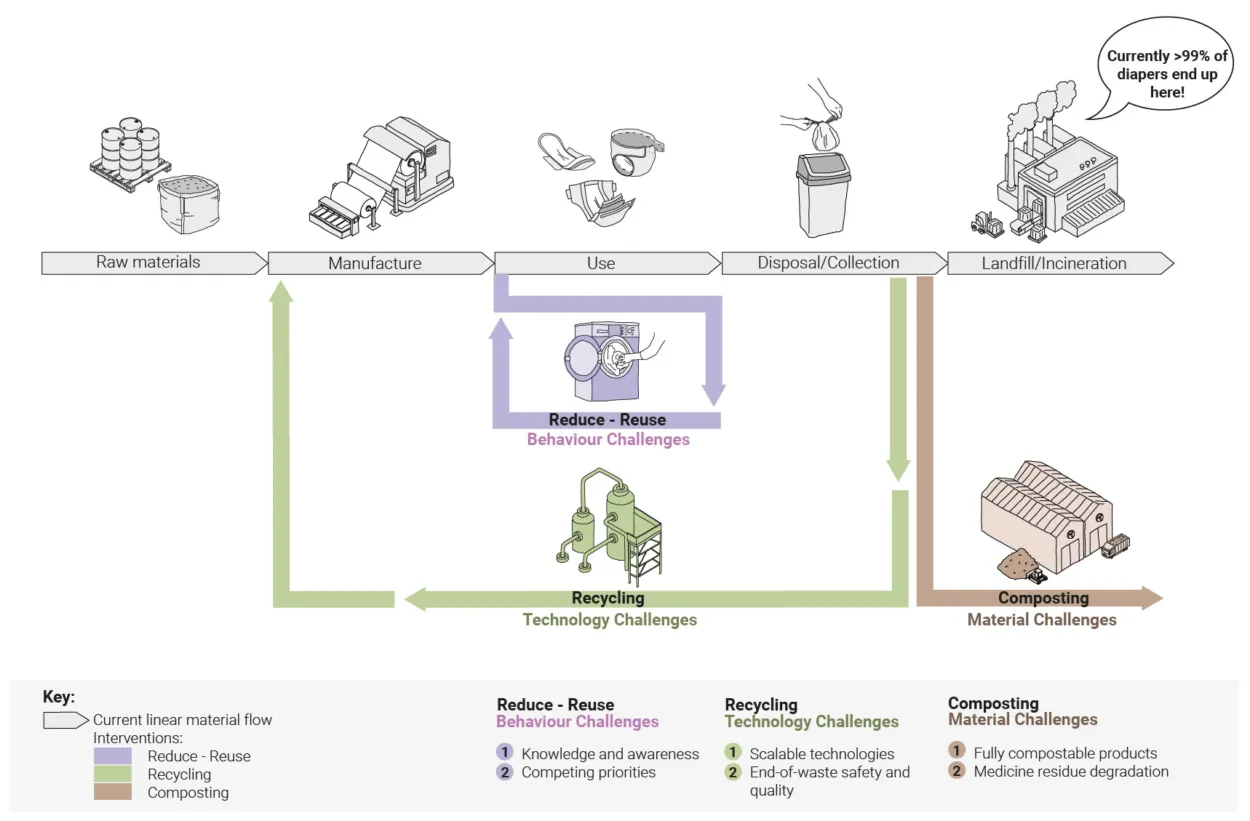
Second, the authors call for greater investment in recycling technologies. Recycling AHPs remains challenging because these products contain a complex mix of plastics, fibres and super-absorbent materials and are often contaminated with human waste and pharmaceutical residues. While some recycling technologies already exist, most can recover only a portion of the materials. Further innovation is needed to enable large-scale material recovery and effective decontamination.
Third, the paper explores the potential for fully compostable absorbent hygiene products. Although some products are currently marketed as biodegradable, significant technical hurdles remain before AHPs can be safely processed through industrial composting or anaerobic digestion systems. Advances in materials development, alongside supportive regulatory frameworks, will be needed to make this approach viable at scale.
Importantly, the study argues that no single solution will be sufficient or work everywhere. The most effective interventions are likely to vary across regions depending on local waste infrastructure, economic conditions and cultural practices. Addressing the environmental impact of AHPs will require coordinated action across product design, materials innovation, waste infrastructure, policy and consumer behaviour, while ensuring products remain affordable and accessible for the people who rely on them every day.
Read the full article in Nature Sustainability: https://rdcu.be/fvoDj